Homepage/Science Research · Plant Science
The Effect of Occlusives on Transpiration Rates in Vaccinium corymbosum
An independent experimental study of how occlusive agents change leaf transpiration and water retention in highbush blueberry.
Contact BrendanThe research question
Can a leaf hold water longer?
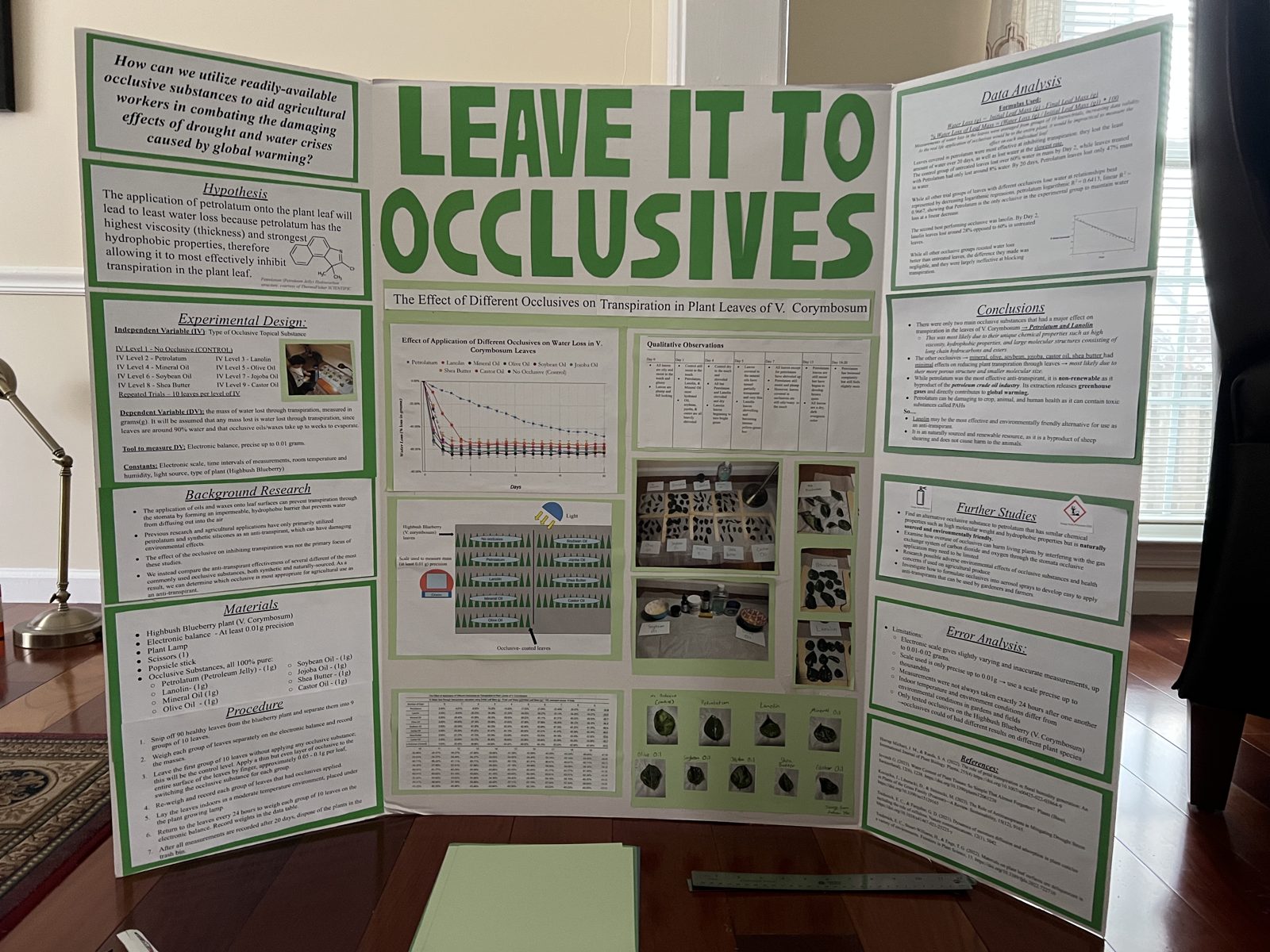
The study tested whether a surface occlusive could slow water loss from highbush blueberry leaves enough to matter during drought. The work joined controlled mass-loss measurement with direct comparison across multiple treatment conditions.
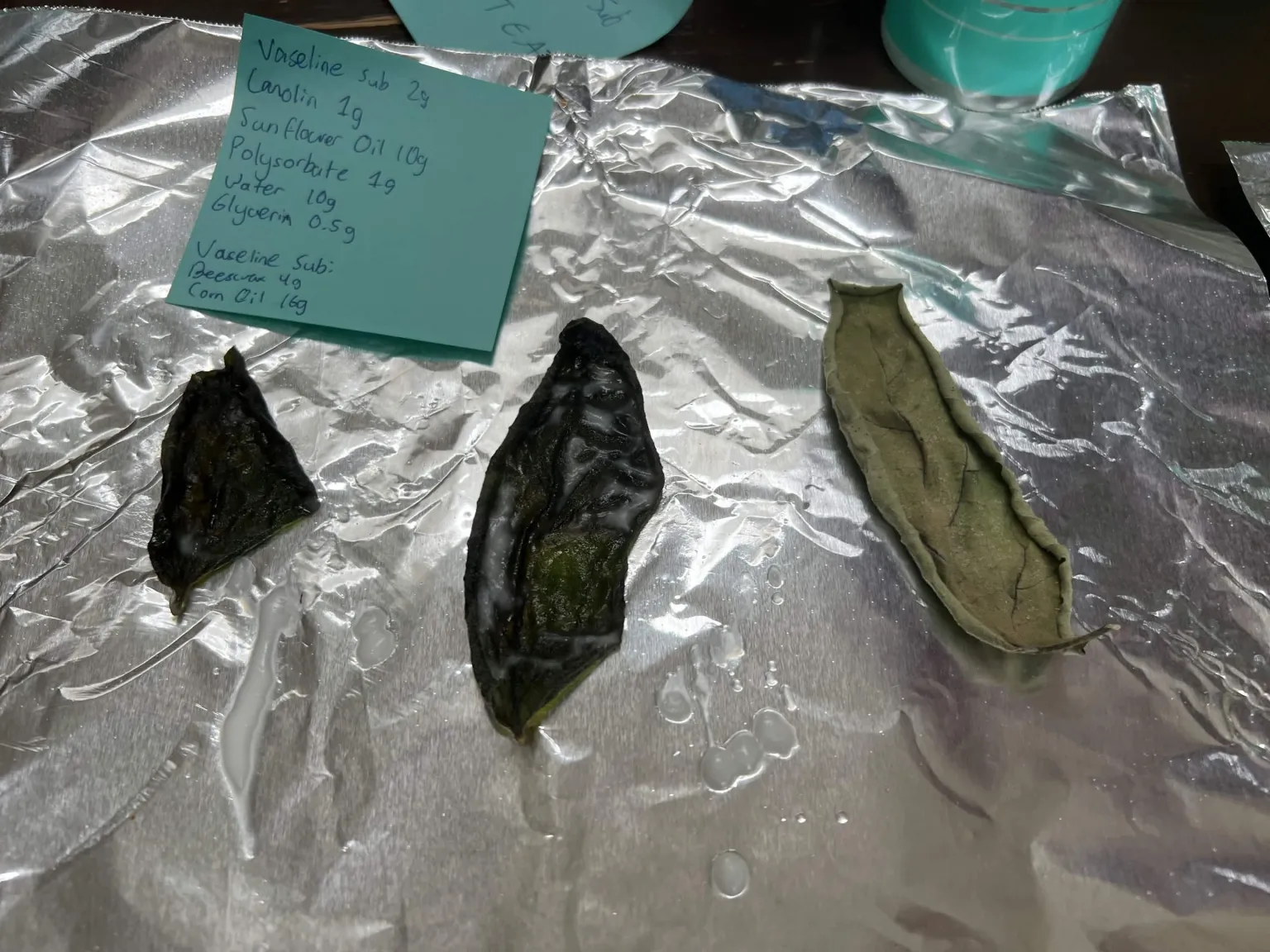
Study design
A controlled comparison of water loss.
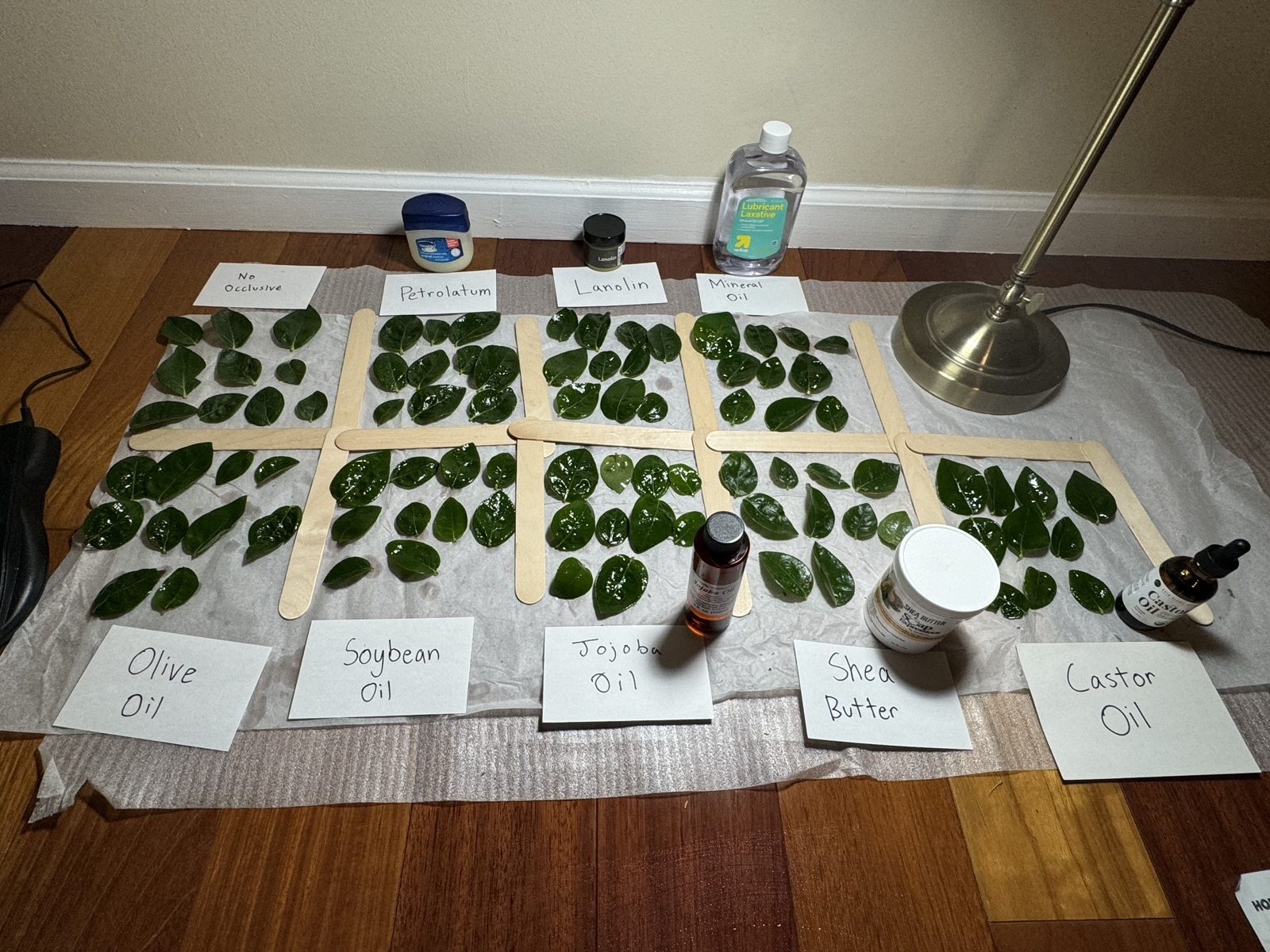
The procedure isolated treatment conditions, tracked change through precision measurement, and used statistical analysis to compare effectiveness and durability.
- 01
Prepare treatment groups
Organize highbush blueberry leaf samples into controlled conditions for side-by-side comparison.
- 02
Apply occlusives
Treat samples with surface agents designed to reduce moisture loss while keeping the protocol consistent.
- 03
Measure mass loss
Collect high-precision quantitative measurements over time as a proxy for transpiration and retained water.
- 04
Compare performance
Use statistical analysis to evaluate the relative efficiency and durability of the tested occlusives.
Publication
From experiment to published paper.
The study was written as a formal paper and published in The Curieux Academic Review in December 2025. It also placed 3rd in Plant Science at the school round of the Fairfax County Regional Science and Engineering Fair.
Read the paper — page 425Why it matters
Drought-hit and irrigation-poor communities need ways to protect plants without continually adding water. Establishing which surface treatments measurably retain moisture provides an evidence base for that problem.
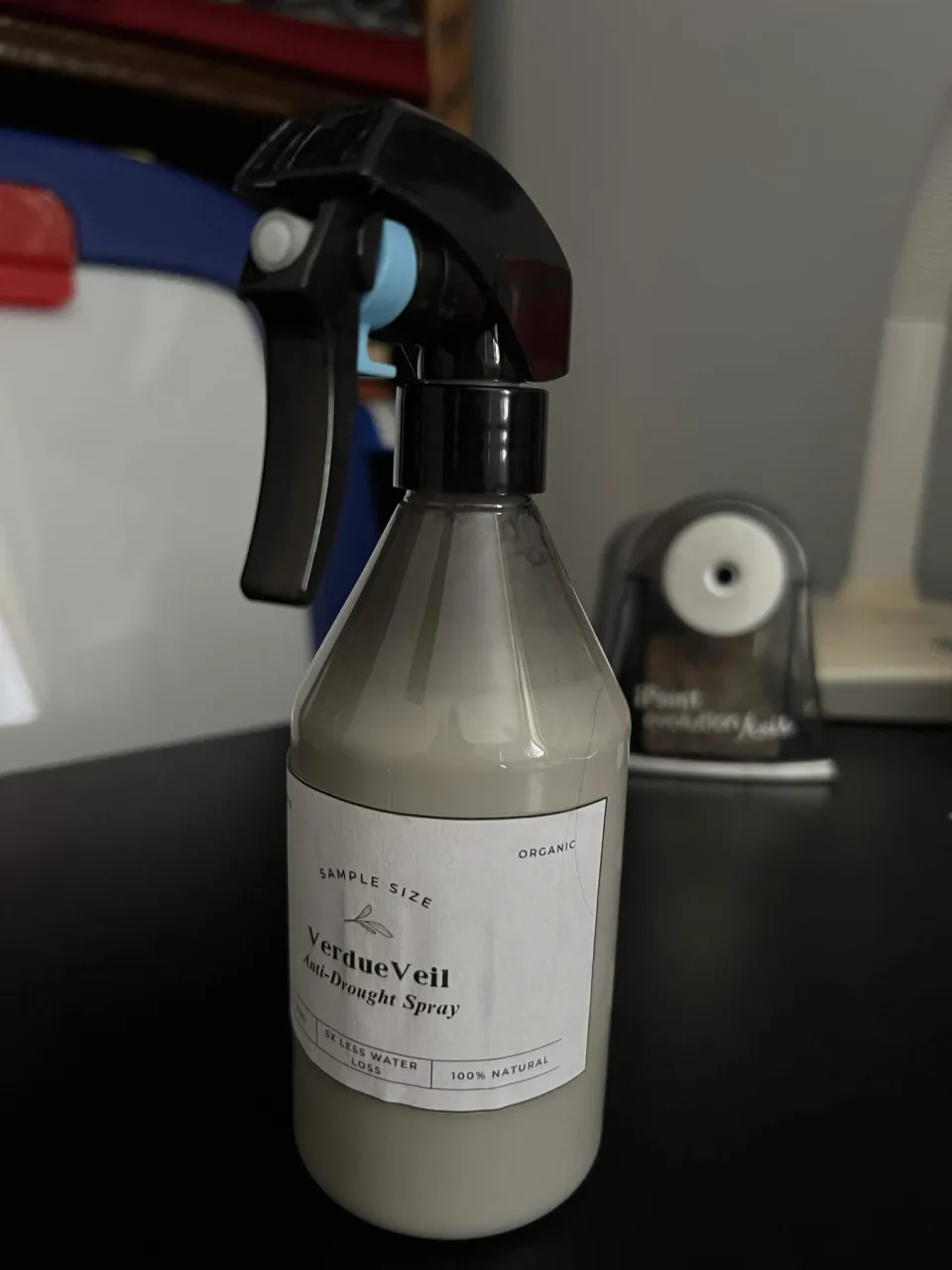
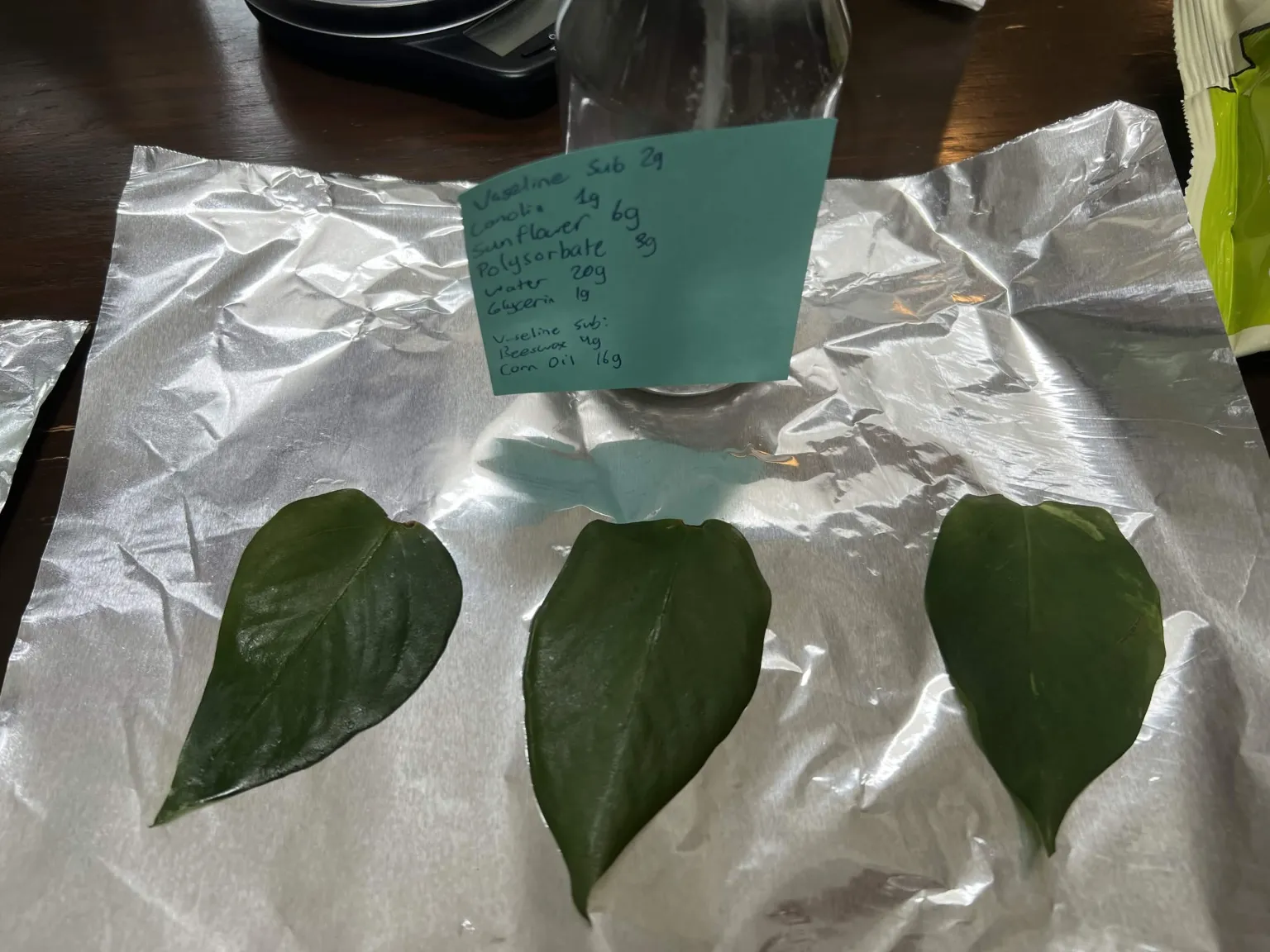
The study became the scientific groundwork for VerdureVeil, carrying a controlled experiment forward into a plant-hydration venture.
- 2025
- Published in The Curieux Academic Review
- 3rd
- Plant Science, school fair round
- 1
- Independent experimental study
- 500+
- VerdureVeil customers reached after the research
Discuss this research.
Research, engineering and community collaborations.