Homepage/Science Research · Materials Engineering
Fabrication and Physicochemical Characterization of a Novel Glycerol-Plasticized Chitosan-Starch Biopolymer Composite
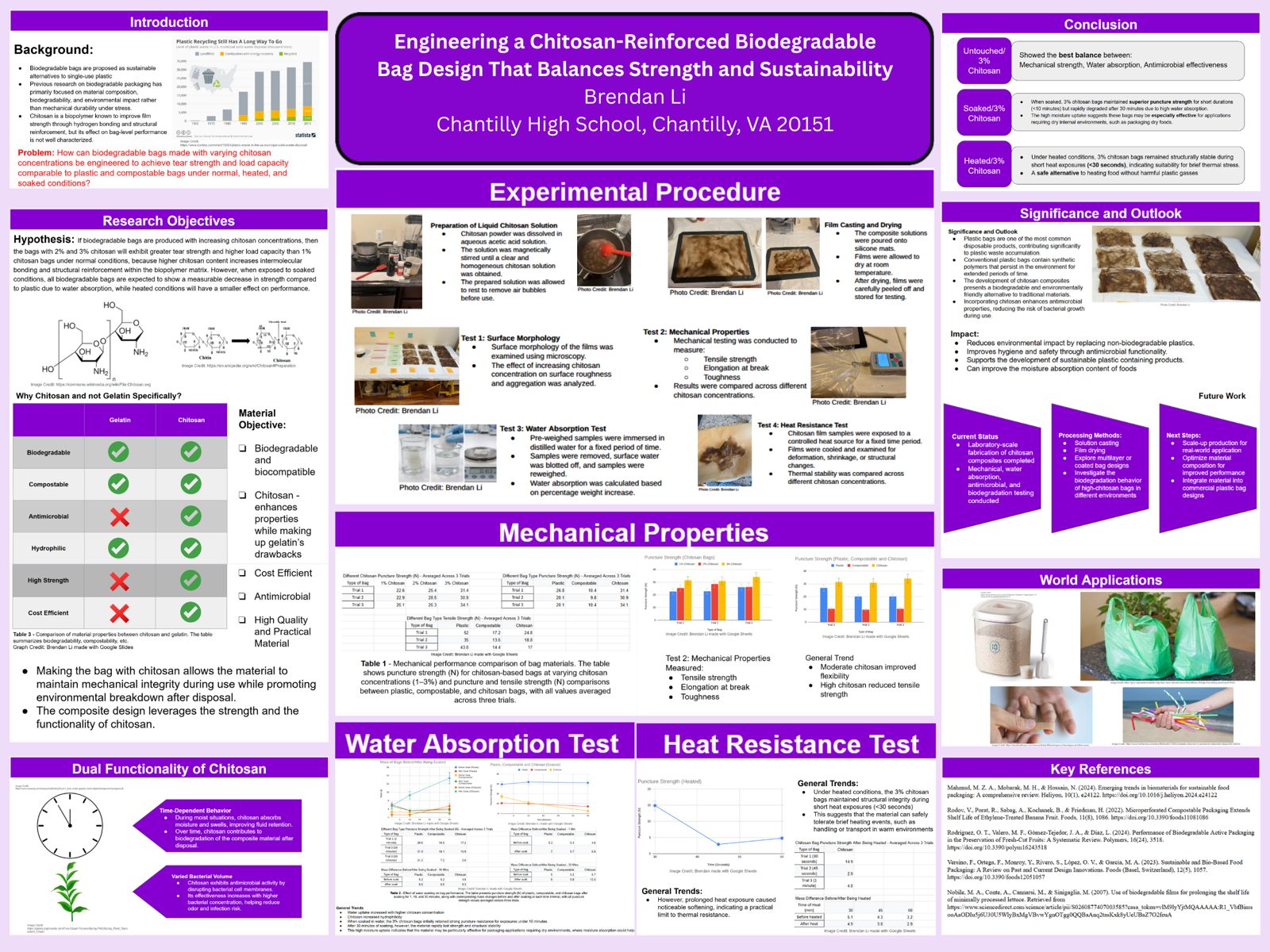
Fabrication and physicochemical characterization of a glycerol-plasticized chitosan-starch composite, investigating its potential as a biodegradable material.
Contact BrendanThe challenge
Strength without permanent plastic.
Conventional bags are durable because they are synthetic, while many biodegradable films fail under everyday loads. This independent study asks whether chitosan, a natural polymer derived from shellfish chitin, can reinforce a biodegradable film without giving up its sustainability advantage.
Experimental design
One material, four real-world tests.
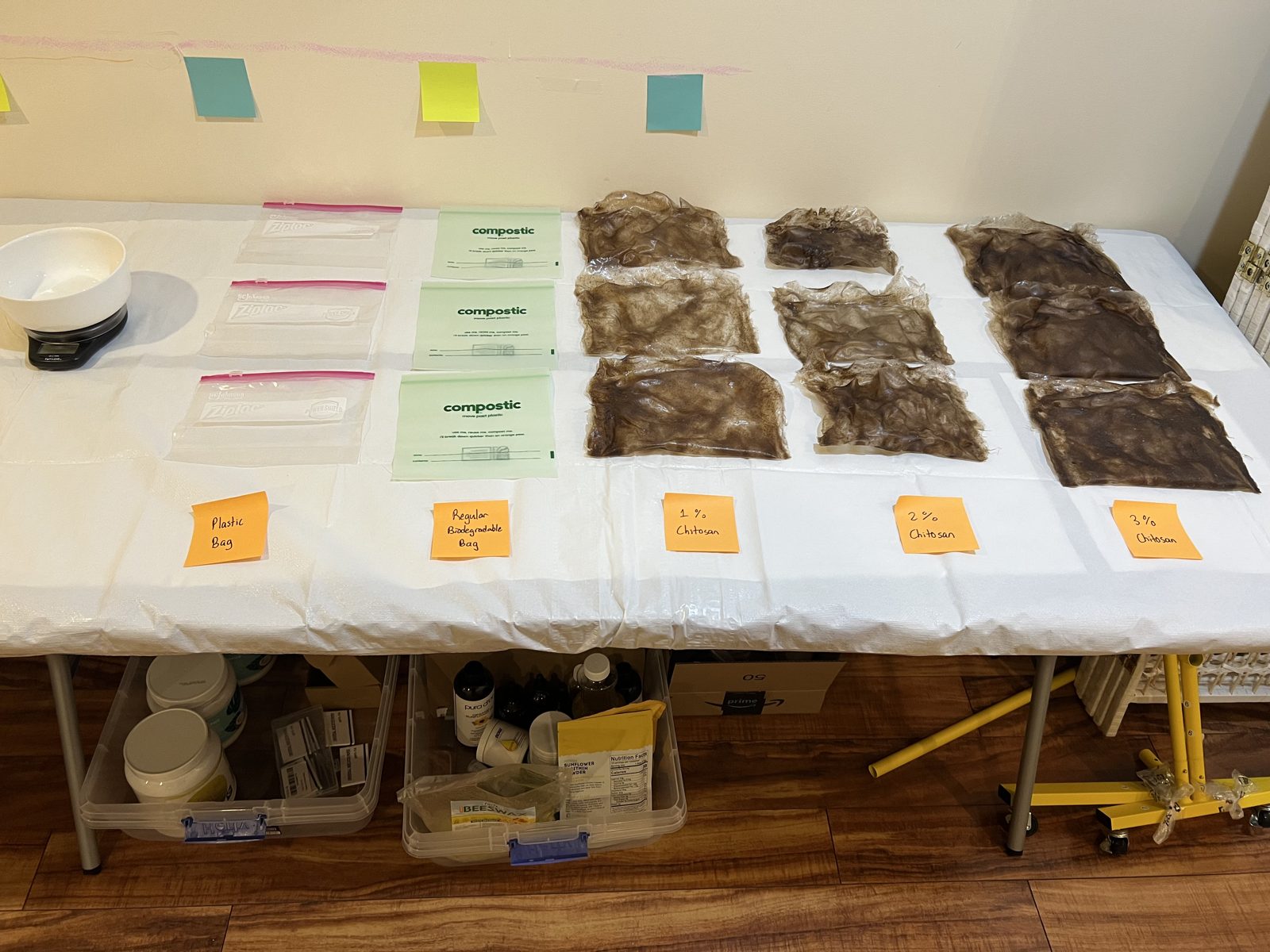
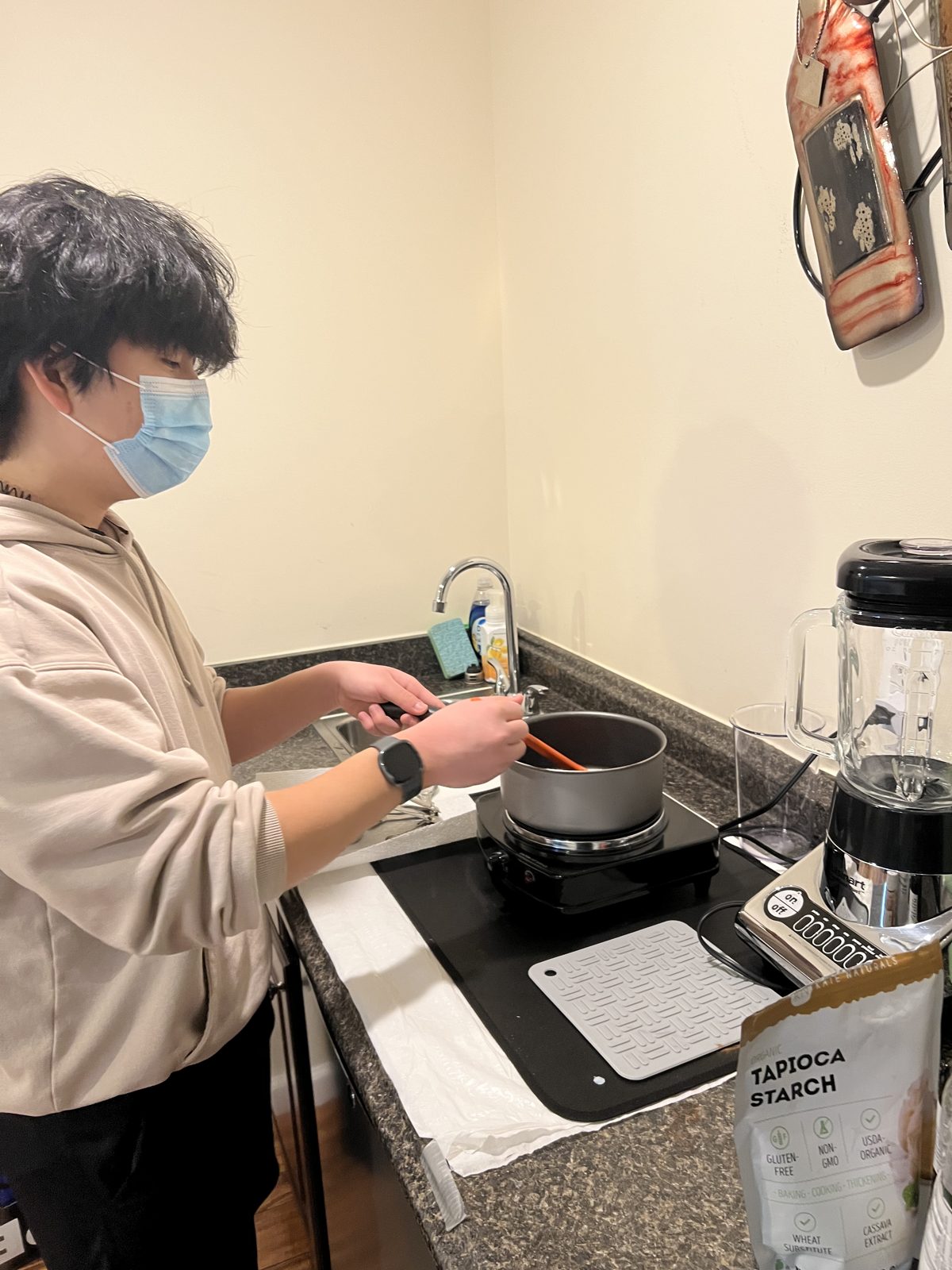
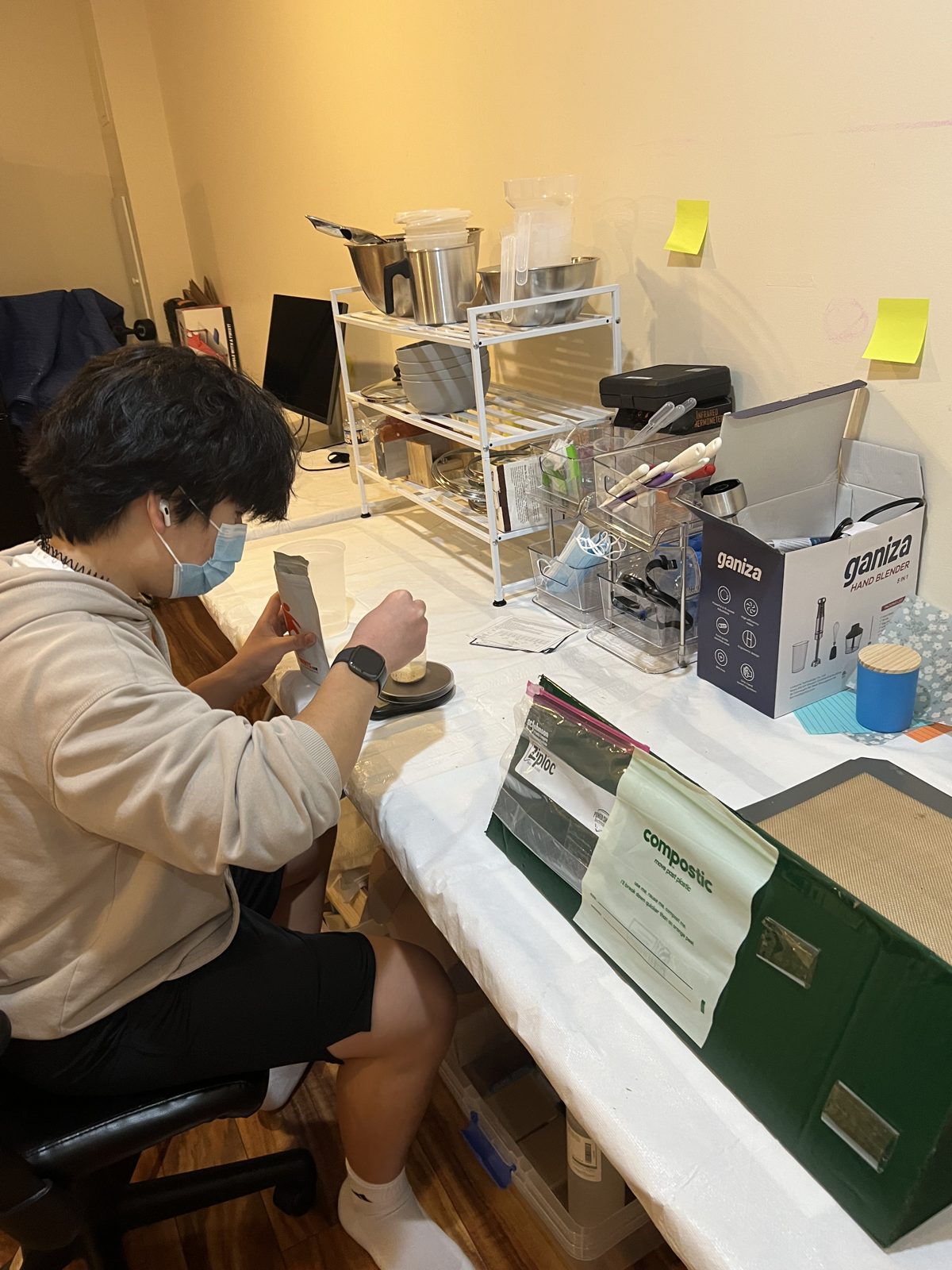
Each formulation was produced under controlled conditions, then evaluated across the mechanical and environmental stresses a bag encounters in use.
- 01
Formulation
Fabricate films with varying chitosan concentrations so the effect of reinforcement can be compared directly.
- 02
Tensile and puncture testing
Measure resistance to pulling and piercing—the two failure modes that determine whether a bag can carry a practical load.
- 03
Heat and water exposure
Test how each film behaves when environmental conditions challenge its shape and structural integrity.
- 04
Data-driven selection
Compare the mechanical results to identify the concentration that best balances strength and flexibility.
From prototype to evidence
Testing the claim, not just the idea.
The project moved beyond producing a biodegradable sample. A repeatable testing program created numerical evidence for comparing formulations and made the final material choice defensible in a research paper, poster, and competition presentation.
Recognition
- 1st Place, Earth and Sustainability — Virginia & Invention DC State Level, May 2026
- 2nd Place, Environmental Engineering — Fairfax County Regional Science and Engineering Fair, Mar 2026
- Prototype Award — Invention Virginia Expo States, May 2026
- Science and Engineering Innovation Award — Virginia Tech DC Metro Region, Mar 2026
Why it matters
A biodegradable bag must survive the same ordinary stresses as the plastic it replaces. By pairing material development with controlled testing, this project addresses the practical reason many sustainable alternatives are rejected: insufficient durability.
The goal is a film people can trust with real loads, supported by measured performance rather than an environmental claim alone.
- 4
- Controlled test categories
- 1st
- Virginia & Invention DC state level
- Patent
- Pending for the material innovation
- 2026
- Regional and state recognition
Discuss this research.
Research, engineering and community collaborations.